TRIBAL LAND ACknowledgement
Reverence andRecognition
Namchak acknowledges that we are in the homelands of the Séliš (Salish), Koontenai, and Ql̓ispé (Kalispel) people. Today, we offer our respect for their history and culture, for their ancient and continuing presence in this landscape, and for the path they have shown us in caring for this place for the generations to come.
Land Acknowledgment
In English and Salish
We recognize that Namchak sits on the ancestral homeland of the Salish, Kootenai, and Kalispel peoples.
Es mistéʔes qe es lʔci łu l̓ Ksanka u Qlispélixʷ sqlixʷúʔulexʷs t Namčak.
This area has been occupied by Ql̓ispé (Kalispel) and Ksanka (Kootenai) people since time immemorial.
Ql̓ispé u Sq̓lsé es lcʔiʔi l̓ ye stulixʷ x̣ʷl̓ sqsiíp.
There are two bands of Ql̓ispé the Upper, and Lower Ql̓ispé. The Upper Ql̓ispé are from Montana and the Lower Ql̓ispé reside in Washington.
Epł eslql̓sp̓élixʷ. Nwist tl̓ ntx̣ʷetkʷ łu Ql̓ispé tl̓ ye stulixʷ u Ql̓ispe nwist tl̓ ntx̣ʷetkʷ łu č̓tlihaqs.
The Hellgate Treaty of 1855 established the Confederated Salish and Kootenai Tribes sovereign nation.
Łu t opnčstqn eł hén̓młnk̓ʷoʔqín eł clčłʔupn eł cil q̓ey̓min cuis iheʔ łu cntels l̓ ye sqlixʷulexʷ t sqlqelixʷ.
This treaty also established the Flathead Indian Reservation that is home to three tribes, the T̓at̓ʔayaqn (Bitterroot Salish), Upper Ql̓ispé, and Ksanka.
Nexʷ ye q̓ey̓min ełp sqelixʷúʔulexʷ x̣ʷl̓ T̓at̓ʔayaqn, Ql̓ispé, u sq̓lsé.
Following the Hellgate Treaty of 1855, land dispossession and attempts of ethnocide against the Séliš, Ksanka, and other tribes were made in efforts to acquire land.
Suyapi p̓ic̓m łu T̓at̓ʔayaqn x̣ʷl íʔimšm č̓ i sic sqlixʷulexʷ. U plpulsntm łu Séliš u es tixʷlm sqlqelixʷ x̣ʷl̓ q̓eʔečst łu sqlqélixʷ t Suyapi x̣ʷl es ntéʔe t stúʔulixʷs.
We acknowledge the harms and mistakes of the colonial past, and we dedicate ourselves to move forward collectively with tribal communities in a spirit of reconciliation.
Łu ne qe mipnunm łu Suyapi č̓skʷúʔulms łu l̓ Sqlqélixʷ u stúʔulixʷs. Hoy qe ihém! Tma tʔé pistem̓ qe uł ep x̣spupúʔus.
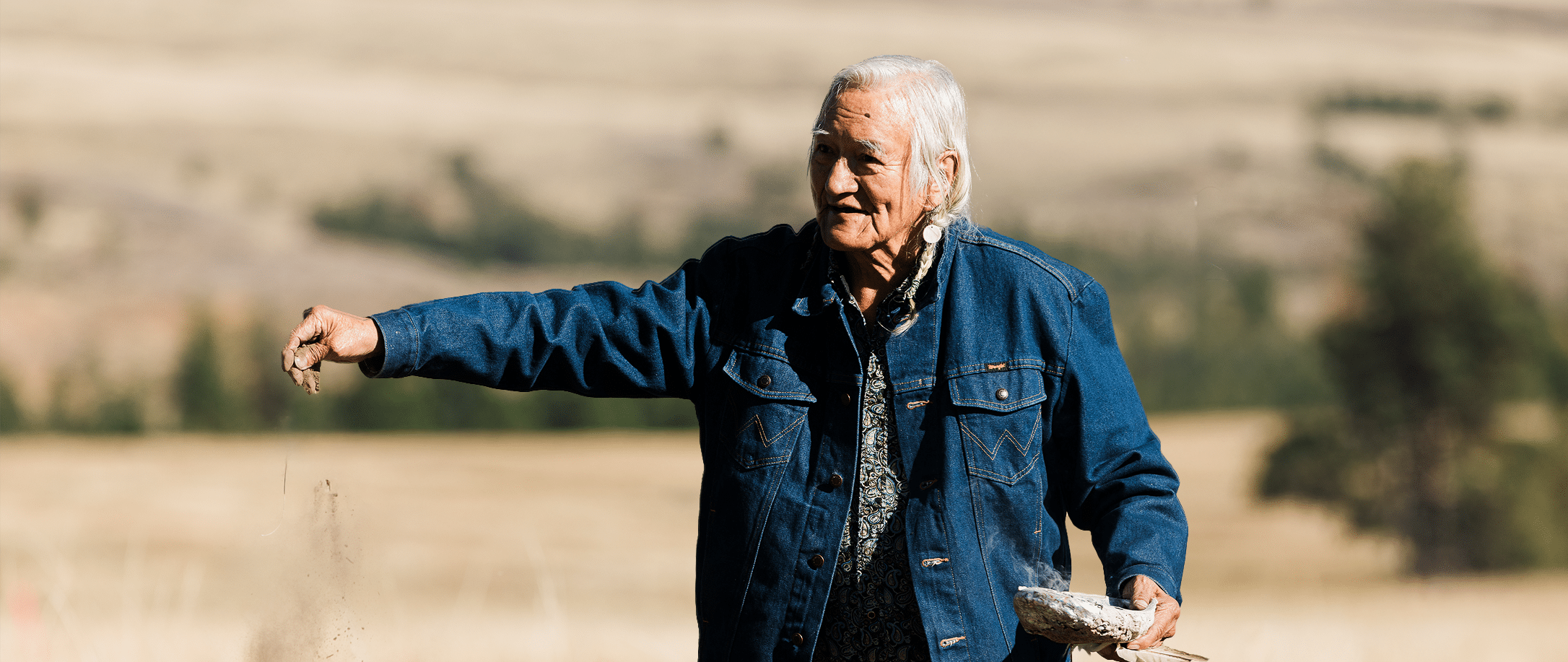
Today, CSKT members continue to gather for seasonal bitterroot digs in Hot Springs.
Yetłx̣ʷásq̓t puti es x̣ec̓ti łu sp̓eƛ̓m̓ l̓ Nayyáykʷ t sqlqelixʷ.
The Salish placename for Hot Springs is Nayyáykʷ ‘place of the hot spring coming out’.
Nayyáykʷ łu Séliš skʷstulixʷ.
The natural hot springs are rooted in Salish culture and are considered sacred sites.
Ye nayyáykʷ nkʷtnaqsm x̣ʷl̓ sqlqelixʷ u nkʷúʔulmis.
The Salish and Ksanka people follow seasonal cycles to this day that sustain a deep connection to the land.
Séliš u Ksanka puti es sp̓lp̓lčnuxʷm u nx̣mnčulexʷ.
We have ongoing shared responsibilities to protect and honor this land.
Qe uł putʔem u čst̓im łu ye stulixʷ.
Namchak strives to build sustainable relationships with local Indigenous communities through offering Indigenous educational programing, bitterroot digs, native plant harvests, Salish language signage, and the sharing of permaculture harvests with the CSKT Food Sovereignty Program.
Namčak es ntéʔe ihém u es ntéʔe l̓áʔax̣tmis łu sqlqelixʷ. U epł sqelixʷ sxʷm̓im̓éy̓em, x̣ect t sp̓eƛ̓m̓, tixʷcnm, Nselišcn scq̓y̓q̓y̓i, u qs maw̓šíʔiti łu k̓ʷól̓łq sʔiłn t Namčak.
Copyright Xwlxwilt LLC. All rights reserved. No translations may be reproduced, distributed, or transmitted in any form or by any means outside of your institution, without prior written permission of the translator.